



This Industry Spotlight was authored by Chris Osian, Product Manager at Starline, a brand of Legrand
For decades, data center power planning followed a fairly straightforward rule: be precise. Engineers sized infrastructure around predictable growth models and worked hard to avoid paying for capacity that might never be used. Every dollar mattered, and excess capacity was often viewed as waste. Now, AI has changed that equation completely.
As operators race to support increasingly demanding AI workloads, power density is climbing far faster than traditional planning models were designed to handle. Hardware roadmaps are evolving at a pace that would have seemed unrealistic just a few years ago.
In response, many organizations are moving away from the lean engineering philosophy that dominated the industry for decades. Instead, they are embracing something very different: strategic over-engineering.
The Collision of Construction Timelines and AI Innovation
At the heart of the challenge is a growing mismatch between how quickly AI technology evolves and how long it takes to build a data center. A modern facility can take anywhere from 18 to 36 months to design and construct. The AI infrastructure destined for that facility, meanwhile, may change dramatically in just one or two years. This gap creates a difficult problem.
Critical power infrastructure such as switchgear, generators, and transformers often carries lead times approaching 18 months. Operators must commit to equipment decisions early if they want any chance of securing the necessary hardware. But locking in a design too soon can leave a facility undersized before it even opens, especially as the next generations of AI racks arrive in-market with significantly higher power requirements. The result is that the old approach to data center construction no longer works.
Before the AI boom, operators could often repeat the same proven design across multiple phases of a project. Phase one looked much like phase five. Consistency reduced risk and simplified planning. Today, however, that same rigidity can actually become a liability.
Many forward-looking operators now finalize only the first one or two phases of a build while intentionally leaving later phases open for redesign. The goal is simple: preserve flexibility for whatever hardware requirements emerge over the next several years. Here’s why.
The 800-Volt NVIDIA Shockwave
One of the biggest drivers behind the growing move towards agile phasing is a fundamental shift in rack-level power delivery.
For years, data centers benefited from relatively stable assumptions around voltage and current requirements. That stability is beginning to disappear. NVIDIA and other industry leaders are now advancing roadmaps that point toward 800-volt DC architectures.
The industry has explored DC power before. Various initiatives centered around 380-volt and 400-volt architectures generated interest, but none achieved broad adoption. This time may be different. NVIDIA’s market influence is significant enough that its roadmap is encouraging serious conversations throughout the market. Infrastructure manufacturers, data center operators, and enterprise end users are all evaluating what an 800-volt future could mean for their facilities.
This is far more than a routine upgrade.
An 800-volt architecture represents a major shift in how power is distributed throughout the data center. Because these plans are now being discussed publicly, organizations recognize they need to prepare the underlying infrastructure well before the technology becomes mainstream.
The era of gradual, predictable power growth is ending. Demand is rising much faster than that. Across the industry, many expect data center power requirements to double within only a few years.
The Era of Strategic Over-Engineering
This growing reality raises an uncomfortable question: How does a data center operator design a facility today for technology that has not fully arrived yet?
The answer, increasingly and paradoxically, is to build beyond current requirements, but only a phase or two at a time. Because nobody can accurately forecast the exact shape of AI infrastructure three or four years into the future, operators are deliberately creating room for uncertainty. Flexibility has become a design objective in its own right.
As a result, CapEx strategies are changing. Oversized equipment, once viewed as unnecessary spending, is now being treated as a form of risk management. Data center providers and enterprise buyers are approaching infrastructure vendors with a new mandate: deliver the highest-capacity power infrastructure available today, even if the end use is not fully defined.
The thinking is straightforward. Installing larger power backbones and higher-capacity busways now may increase upfront costs, but those costs are often far lower than the expense of retrofitting a facility later. Operators would rather pay for capacity they might need than face downtime, construction disruptions, and costly rip-and-replace projects a few years down the road. In many cases, excess capacity has actually become a form of insurance.
Partnering for an Unpredictable Future
No one can say with certainty what AI rack densities will look like five years from now.
What seems far less uncertain is the direction of travel. Power requirements are rising, hardware cycles are accelerating, and the gap between infrastructure planning and technology deployment continues to narrow.
In that environment, agility becomes one of the most valuable assets a data center can have. Operators need partners capable of supporting extreme power densities, delivering flexible infrastructure solutions, and maintaining resilient supply chains. Those capabilities are becoming just as important as the equipment itself.
In the AI era, the biggest risk may no longer be building too much capacity. It may be building too little.
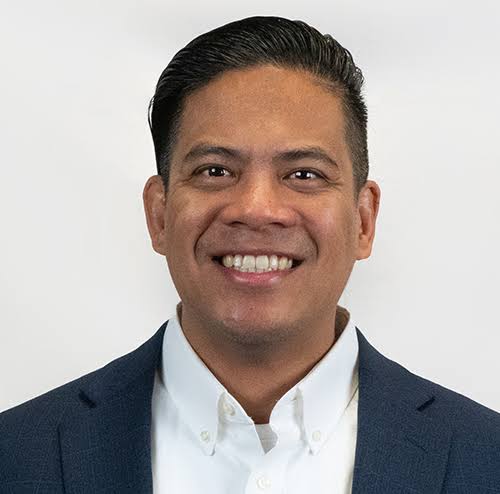 Author Biography
Chris Osian is Product Manager at Starline, a brand of Legrand, where he is responsible for the global portfolio of data center products, including track busway and metering solutions. He has more than 15 years of experience in product and application engineering and brings extensive expertise in data center power distribution and monitoring. Chris holds a bachelor’s degree in electrical engineering from San Francisco State University and an MBA from Golden Gate University.
If you haven't already, please take our Reader Survey! Just 3 questions to help us better understand who is reading Telecom Ramblings so we can serve you better!
Categories: Datacenter · Energy · Industry Viewpoint Our Main RSS Feed
 Our LinkedIn Group
 Our Facebook Page
 Follow @TelcoRamblings
 Zpoa on Security in the Cloud: SD-WAN, SASE, and Staying Ahead of Threats: “This is a great overview of how SD-WAN and SASE are evolving to address the security challenges of cloud-based and…” Sep 11, 09:35


Discuss this Post