



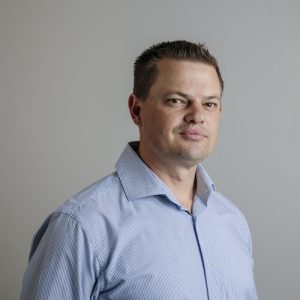


This Industry Viewpoint was authored by Daria Batrakova, Director, Telecom Solutions, FNT Software and Mark Gibson, Head of Product, Inmanta
Private 5G networks are moving from individual deployments toward a broader opportunity for communications service providers (CSPs). Enterprises across industries are looking for connectivity that can meet demanding requirements around latency, security, availability, and compliance. For CSPs, however, scaling these deployments presents a fundamental operational challenge: How can they deliver highly tailored private networks without making every customer deployment a unique, resource-intensive project?
Today, private network deployments often require dedicated teams to design and provision environments around individual customer requirements. This approach provides flexibility, but it can be costly and time-consuming and relies heavily on specialized expertise. At the other end of the spectrum, standardized managed services can improve scalability but may limit customization and the CSP’s ability to optimize how network resources are deployed.
Neither model fully addresses the opportunity. The path forward is an approach that combines the flexibility of customized deployments with the repeatability and efficiency of automation.
Moving Beyond Automation
Automation is already central to network transformation, but automating provisioning alone does not solve the private network scaling challenge. For automation to make effective deployment decisions, it needs context.
A private network may span on-premises infrastructure, telco edge locations and public cloud environments. Available capacity, topology, performance characteristics, security requirements and application needs can vary across those environments. Without accurate infrastructure information, an automated workflow can only make decisions based on incomplete inputs.
This makes infrastructure awareness a critical component of intelligent orchestration. Real-time visibility into physical, logical, and virtual resources can provide the information needed to determine whether a deployment is feasible and where its components should be placed.
From Customer Intent to Deployment
An intelligent orchestration model starts with the customer’s desired outcome rather than a collection of rigid scripted configuration tasks. A CSP or enterprise customer defines requirements such as performance objectives, latency constraints, security considerations, and other business parameters.
The orchestration layer then evaluates those requirements against available infrastructure using a dynamic composable model turning intent into desired state. An optimization engine can assess factors such as resource constraints, cost, and performance to identify an appropriate placement for network functions and edge applications.
This creates a more adaptive model for private network deployment. Instead of designing every environment from scratch or customizing fixed templates to fit a customer need, CSPs can use dynamic service definitions that compare reality with intent to repeatedly provision different network variants based on customer-specific requirements.
The distinction is important. Standardization does not have to mean uniformity. A service can be standardized at the orchestration level while remaining configurable at the deployment level.
Designing for Multi-Environment Complexity
The need for this approach becomes even more pronounced as network architectures become increasingly distributed. Private 5G workloads may need to be placed across enterprise infrastructure, telco edge environments or public clouds depending on the application’s requirements. Having an orchestrator that can span each domain without compromising intent resolution makes handling these distributed services simpler with a unified service state view.
An intelligent deployment process can evaluate those environments collectively rather than treating them as isolated domains. It can identify the most appropriate placement based on cost, capacity, latency, security, and other constraints, while also allowing alternative deployment options when a customer is willing to prioritize a particular requirement.
This flexibility can create new commercial possibilities for CSPs while helping them make more efficient use of their infrastructure.
Keeping Infrastructure Data Current
Intelligent orchestration also cannot be treated as a one-time provisioning exercise. Network environments change continuously as capacity is added, resources are consumed, equipment is replaced, operating systems are patched and services are scaled.
Maintaining an accurate view of infrastructure throughout the service lifecycle allows orchestration and optimization processes to respond to those changes. It must support dynamic reconfiguration for scaling, failover, or further optimization while reducing the risks associated with outdated or inaccurate resource information. It must also understand when software versions have shifted and either renew configuration to actively close any holes in the security attack surface.
For CSPs, this can also simplify documentation and compliance across complex, cross-domain deployments.
A More Scalable Model for Private Networks
The future of private 5G will not be defined simply by the ability to deploy another network. The competitive advantage will increasingly come from the ability to deploy, optimize, manage and maintain customer-specific networks repeatedly and efficiently.
Achieving that requires more than automation. CSPs need orchestration that understands customer intent, optimization that can evaluate competing constraints, and accurate infrastructure intelligence to connect those decisions to the resources actually available.
By bringing these capabilities together through an open and modular architecture, CSPs can move away from treating every private network as a bespoke project and avoid the limitations and cost implications of rigid, hand-crafted services. The result is a more scalable operating model – one that gives enterprises the flexibility they require while giving CSPs greater control over cost, resources, and operational complexity.
ABOUT THE AUTHORS
 Daria Batrakova is Director, Telecom Solutions at FNT Software. She has worked in network operation, OSS integration and solution advisory roles in the telecommunications field for almost 20 years. For more information, email marketing@fntsoftware.com or visit https://www.fntsoftware.com/en.
Follow Daria on LinkedIn: https://www.linkedin.com/in/dariabatrakova/
Follow FNT Software on LinkedIn: https://www.linkedin.com/company/fnt-software/
 Mark Gibson is a widely experienced Product Manager who has worked for the last 25 years in the Telecommunications Software industry across ordering, orchestration and inventory solutions. He has led multiple global product teams, successfully delivering software to many of the biggest and most demanding operators in the world. He has also helped numerous start-ups refine their positioning and product scope.
Additionally he has led and contributed to standardisation groups, notably the SD-WAN and Security work in mplify alliance. He holds seven patents from protocol development work while at Nortel.
If you haven't already, please take our Reader Survey! Just 3 questions to help us better understand who is reading Telecom Ramblings so we can serve you better!
Categories: Industry Viewpoint · SDN · Wireless Our Main RSS Feed
 Our LinkedIn Group
 Our Facebook Page
 Follow @TelcoRamblings
 Zpoa on Security in the Cloud: SD-WAN, SASE, and Staying Ahead of Threats: “This is a great overview of how SD-WAN and SASE are evolving to address the security challenges of cloud-based and…” Sep 11, 09:35


Discuss this Post