
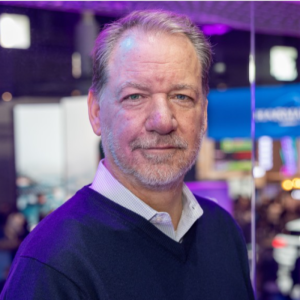
 The rise of AI infrastructure spending may seem recent to most, but to MOX Networks, it has been a reality for nearly a decade. Born as the fiber infrastructure support for NantWorks, a global ecosystem of healthcare, life sciences, and technology companies founded by Dr. Patrick Soon-Shiong, MOX has been designing, planning, building, and operating unique high-capacity routes to meet its own capacity needs while offering excess capacity for general demand. MOX’s latest effort has been to acquire multiple pairs on both the Topaz transpacific and Firmina transatlantic systems to satisfy internal demand and to commercialize access capacity. With us today to talk about MOX’s infrastructure investment plans, both terrestrial and subsea, is President and CEO Allen Meeks.
TR: The last time we talked, you were finishing the Seattle-Portland route and looking at backhaul to Toptana’s proposed landing station to the west. Where is that at now?
AM: We completed the Seattle-Portland build, and it has been very well received in the marketplace due to growing capacity needs in the Pacific Northwest. Toptana invested in that route and continues to invest in planning, construction, design, and permitting for the east-west route in conjunction with their planned cable landing station along Ocean Shores, WA.
TR: MOX itself has been dipping into the subsea bandwidth business lately, how did that come about?
AM: I was reviewing MOX’s asset portfolio in North America and Japan: and realized that building out to a handful of landing stations and locations could bring us opportunities to provide fronthaul business where we had networks. Fronthaul is marginal when you plan out the cost of a new subsea cable project, and as a carrier, you must figure out a commercially available piece. Topaz is new and coming online, and PC1 is aging. MOX developed a business case to procure capacity on Topaz, while leveraging our network assets in both North America and Japan. I was waiting for a carrier to reach a deal with Google and commercialize the capacity so we could be a customer, given our own medical AI needs within Nantworks and Dr. Patrick Soon-Shiong’s world. We also have dark fiber in Japan and have been a licensed telco there for 10 years. We do backhaul from Ajigaura Landing Station into Tokyo. The waiting triggered some forward thinking within the MOX boardroom. Why not do a deal directly with the cable builder?
We assessed capacity and integrated it into our existing systems, as MOX was well-positioned to do so with our Japanese entity and existing connectivity in North America. Our customers wanted capacity from Tokyo to Seattle. Having those end pieces in place was paramount to our ability to move this large-scale endeavor forward, and rapidly. MOX initially procured a significant amount of spectrum on the Topaz cable system. And between our own needs and a couple of large commercial deals, we were at capacity almost immediately.
TR: How did you expand from there?
AM: Due to high customer and internal demand, MOX pursued additional fiber pairs on Topaz. During this time, we also had customers inquiring about our ability to offer capacity on other cables. After careful consideration, MOX decided to acquire additional fiber pairs on Topaz and Firmina. The scope of this opportunity was massive for us, but we also saw a great opportunity on another cable that would link MOX to a new continent. It was an incredible time for our company as we realized the opportunity to expand our global network presence. Firmina stretches from Myrtle Beach, SC, to Sao Paulo, Brazil. We had fiber connecting Myrtle Beach to Atlanta and beyond, so we focused on the capabilities to add a MOX presence in Brazil and to serve as a wholesale provider of capacity and/or spectrum between those markets. The business case made perfect sense, and the timing was on point. This successful venture resulted in MOX acquiring multiple fiber pairs on Topaz and Firmina, which will be commercialized for our customers as well as satisfy growing internal demand. We are already tight on capacity before we’re fully turned up, given the immense demand to date.
TR: Why do you think this market opportunity has arisen?
AM: After the initial subsea buildouts were completed a couple of decades ago by carrier consortia, content players began to join those consortia around 2010. Content and hyperscalers began building cables independently due to evolving capacity needs, and this evolution has reduced the availability of subsea carriers capable of delivering capacity between markets and offering it commercially.
TR: If the traditional subsea players don’t like that business anymore, what makes MOX a good fit for it?
AM: MOX is nimbler than a traditional carrier. As a privately owned network infrastructure and communications provider, we have our own capacity requirements on these cables. We use different economic lenses when evaluating what makes sense and what doesn’t. And we prefer it, honestly, since building big-scale networks is what we’ve done for ourselves. Having a customer do the same thing is a great fit for us. In the carrier space we uniquely understand the hyperscaler challenges, precisely because we build similar, demanding networks for Dr. Patrick’s Soon-Shiong’s medical AI. This is part of our dual mandate of providing a scale-proof network for NantWorks, while also supporting our MOX goals as a commercial communications provider.
MOX can carve off a portion of the spectrum-sharing module and sell it to a cloud operator across two markets, then offer them options from there. Our customers can purchase their own hardware, install and light it themselves, or opt for a build-operate-transfer model. We offer unique options for network independence or fully managed systems, based on their needs.
I don’t see any other North American carriers attempting to do this right now. They seem to have gotten out of this game a long time ago, or don’t have any real interest in participating. North American tech firms are driving this consumption. These unprecedented capacity demands have simultaneously created a new set of significant opportunities and challenges that we look to balance. MOX will likely add more subsea capacity beyond the multiple pairs we have already purchased to date.
TR: What global markets would you like to offer capacity to next?
AM: The world gets small when you start reviewing subsea connections and paths, but in general, we have reviewed opportunities along additional paths across the Pacific, and at least a couple of paths across the Atlantic. There are also interesting possibilities for connecting with our South American cable, in the Caribbean, enabling the potential for Western Europe to reach South America directly. We have a strong internal interest in pursuing diverse and useful routing options that don’t exist today, and that desire is echoed in the market.
TR: What other activity have you seen recently on the terrestrial fiber side of things?
AM: In the past, we have built the Ashburn-Atlanta route, the Columbus-Ashburn route, the Seattle-Portland route, etc., and we’ve been selling capacity along those routes. With the rapid growth of AI, many nascent AI firms are requesting the scale that AWS, Microsoft, and Meta have invested in for 15 years, but they need it very quickly. MOX can sell dark fiber, light full systems, manage those systems, and ensure capacity shows up at either end as requested, which has been good for us. We expect to continue capitalizing on those offerings that we do so well.
TR: How do you approach building out such fiber infrastructure?
AM: When we do builds, sometimes we will lean towards more costly rights-of-way if they mean better support potential down the road, such as building along a private railroad line versus along county roads. County roads are obviously much cheaper, but with private rail, there are few relocations, and the land is both private and protected. There’s a level of security that comes along with what you pay for, and some rails even have their own rail cops that patrol the rights-of-way. MOX also acknowledges that customers seeking the newer networks are looking for the same attributes we value, being buried, secure networks.
TR: What other terrestrial projects are you looking at for the near future?
AM: We are reviewing additional fronthaul construction projects, like the Toptana project we completed, where we see an opportunity to run a new cable to a landing station. We’re not going to buy waves from someone in a CLS back into our network. We will also make more use of our existing fiber. We’ve just selected Ciena RLS systems for the C+L band across all fronthauls to support the increased capacity required by Topaz, for example. We’re doing the same thing on our Myrtle Beach-Atlanta path.
TR: MOX Networks’ original thesis saw bandwidth demand from the medical vertical. How much of that are you seeing so far?
AM: There are so many new things happening within the medical AI space, such as the ability to apply different commercially available AI machine learning tools to data sets. We support a significant portion of that for our parent company, NantWorks. This AI boom is new to many, but it’s been our focus and planning to ensure we don’t run into scale issues when needed.
We’ve seen the demand wax and wane across different routes over the years, in ways very similar to what we’re seeing now with AI and medical AI. But we’ve gone from doing things at the cellular level with genomic sequencing to applying large language models to genetics. You can train an LLM to identify patterns in cell structure and to detect novel or abnormal features. But that has exploded quite rapidly in the last few years. We now see convolutional neural networks paired with LLMs. The next step to do these comparisons will be general adversarial networks, or GANs and Transformers, all of which will create ever more compute, elastic storage and network capacity demand.
Medical AI is evolving very rapidly. Dr. Patrick Soon-Shiong invests heavily in this effort and works deeply in that space. The scale issues have extended well beyond telecom to power generation, chip manufacturing, and even to the raw materials and processing capacity, to manufacture the intermediary components necessary to build the hardware required to meet AI demand. Meeting all this demand is really what the industry is running up against. When we try to translate the compute, storage and network demand into raw infrastructure and what’s needed, that’s where it gets extremely challenging. There’s a bridge that hasn’t been built yet between the possibilities of where AI is headed and the physical infrastructure needed to support it.
TR: How do you think we bridge that gap?
AM: It’s the million-dollar question, and I think we have already started the shift toward imagining that bridge. I think it comes down to controlling and delivering on the supply chain. Requirements like power generation and building telco networks are well within capacity in North America. There’s no shortage. It’s about the industrial build-out for things beyond semiconductors, like industrial materials processing and electricity generation, and how fast can you build out and deliver.
In the post-Cold War era of globalization, we built just-in-time, multi-step manufacturing that relies heavily on varied labor skills, costs, and safe transport across the global oceans. Manufacturing a 3nm CMOS chip for example, is the physical embodiment of the globalized Bretton-Woods system. The complex concert of global public and private cooperation required, exposes the vulnerability of the supply chain for chips. Particularly, the back-and-forth between China, Southeast Asia, and Western markets, are breaking to some extent. And as it breaks, it’s about reshoring manufacturing within the NAFTA system. There are thousands of companies in the supply chain for high end semi-conductors, many of which have a single customer within that supply chain. The vulnerabilities are great. We have built $40 trillion in industrial plant in China alone over the last 35 to 40 years. A lot of that must move. Much of it is shifting to Vietnam, Cambodia, Thailand, Indonesia, and Malaysia, and that’s working to some extent for mid-range semiconductors and other manufacturing, such as automotive and aerospace. But keeping the high-end chip fabrication under control, and as local as possible, is what I think solves the problem for tech firms. In North America, we have the energy; use it. Place the data centers close to the energy sources, “behind the meter”. Then simplify the supply chain and align it with the NAFTA system. COVID taught us all major lessons about supply chain vulnerabilities. The post-COVID supply chain mantra is, “Let’s make it simpler, closer, and more secure.” I think that is how we get a handle on it.
TR: Thank you for talking with Telecom Ramblings!
If you haven't already, please take our Reader Survey! Just 3 questions to help us better understand who is reading Telecom Ramblings so we can serve you better!
Categories: Fiber Networks · Industry Spotlight · Undersea cables Our Main RSS Feed
 Our LinkedIn Group
 Our Facebook Page
 Follow @TelcoRamblings
 Zpoa on Security in the Cloud: SD-WAN, SASE, and Staying Ahead of Threats: “This is a great overview of how SD-WAN and SASE are evolving to address the security challenges of cloud-based and…” Sep 11, 09:35


Discuss this Post