
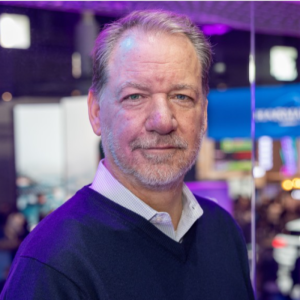

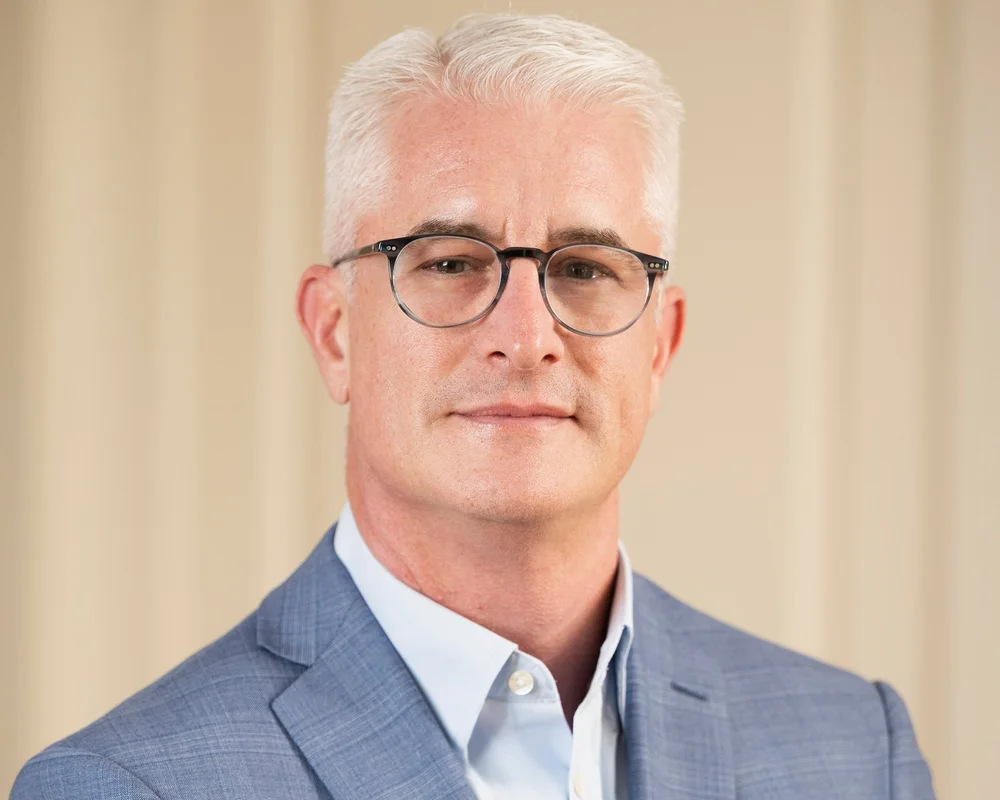
 With AI driving so much infrastructure investment in the data center space, sometimes the regional and middle mile fiber space seems to get less love. But it too is flush with opportunity in today’s market for those with the expertise. eX2, a division of Vivacity Infrastructure Group, has a unique approach to such projects. With us today to talk about Vivacity and eX2’s unique approach to the fiber infrastructure marketplace is industry veteran and Vivacity CEO Christopher Rabii.
TR: What is your background, and how did you get involved with Vivacity and eX2?
CR: I’m an engineer by training, and I have spent 25+ years in what I would call traditional fiber-based telecom. I started out at a pre-dot-com-era company called Metromedia Fiber Network, which later emerged as AboveNet. After AboveNet, I became CTO at Lightpath, which was bought by Altice when they acquired Cablevision, and then spun off as part of a sale to Morgan Stanley Infrastructure Partners. In 2020, I had the opportunity to serve as the CEO of FiberLight, until leading the eventual sale of that company to a New Zealand-based PE firm. Once that transaction was complete, I took a deep breath and said, “What am I going to do next, career-wise?” I ended up at Vivacity through an introduction from a former colleague, and it has been a great match. It has been kind of a circuitous path that’s led me here.
TR: What are the origins of Vivacity? And what does the company look like today?
CR: Vivacity was formed in 2017. The original intent was to become a smart city-focused company. Along the way in 2019, Vivacity and Columbia Capital acquired a company called eX2, and over the next few years acquired another entity focused on wireless infrastructure –which we divested this past May. Today, Vivacity Infrastructure Group is our corporate level with the common shared services that companies have. eX2 is our fiber-focused entity. Vivacity Networks is really a holding company for assets and asset-like rights we acquire through the process of doing business, whether that be via co-investment opportunities, or rights acquired through third-party agreements, and so on and so forth.
TR: Where does eX2 fit into the infrastructure ecosystem?
CR: We do everything in communications infrastructure, full turnkey deployment capabilities ranging from project conception to planning, design, engineering, construction, program management, operationalizing assets, maintaining and commercializing them. When I say turnkey, I mean, you can come to us with, “Hey, we’d love to have this network”, and we can take it from that stage all the way through to completion. And commercialization is one of the things that’s not always in scope for companies that do what we do. Many of our customers are not traditional network owners. Many don’t really have a vehicle by which they can sell the surplus capacity on their networks, while we do have that capability in our business. That’s one of the things that makes us a little bit different than the traditional infrastructure services company that just does design-build.
TR: Where have you done that sort of thing recently?
CR: One of our big project wins was a 25-year agreement with the Arizona Commerce Authority and Arizona DOT to take the assets that they largely have in place and operate and maintain them, and also commercialize them. Most entities, like a DOT, for example, have their own internal uses, sometimes connecting government offices or powering Intelligent Transportation Systems. But they’ve deployed a 432 or a 288 count fiber cable, and they’re probably using just 24 of those fibers, not to mention all the duct and inner duct capacity that tends to get put in the ground once you open a trench. The Arizona DOT is smart enough to know that this infrastructure is really attractive to entities that might want to do business in the Arizona marketplace. They understood as well that they needed a partner for an undertaking like that. It has been a great anchor for us and has really let us blossom in that state.
TR: What kind of other opportunities have come about as a result of the Arizona relationship?
CR: One of the things that comes along with being a trusted partner is that we have people who sit in ADOT’s offices and work right alongside them. They have explored and have kicked off a new build project that’s along I-40 that goes across the northern part of Arizona, and we are now running that build for them. But outside ADOT and ACA proper, we’ve got relationships with Navajo County, Pima County, and Yuma County. Navajo County is a middle mile build to help connect government offices in a very rural area and will eventually enable last mile providers looking to provide services in the county. Pima County is much more urban with a big middle mile project in the works, and Yuma County is more focused on deploying infrastructure to support precision agriculture.
TR: What other opportunities have you been investing in lately?
CR: In the Northeast, we have a county project in Grafton, New Hampshire that is another fiber-based middle-mile buildout.
In the Southeast we have Atlanta, a location we have been in for a long time due to our relationship with Atlanta Beltline, which is a loop around parts of Atlanta where railroad rights have been reclaimed and made into green space. They are using it as a testbed to prove out how you can use fiber infrastructure to kind of cultivate smart city things, whether they be kiosks, smart billboards or smart recycling stations and so forth. Also, as one of several US-based host cities for the World Cup next year, they are putting a bunch of infrastructure in place to support that event. I feel like Atlanta has all the hallmarks of Phoenix because it’s a growing population center generally and is also a focus area for hyperscalers and other data center operators.
In the Midwest, we’ve got a longstanding relationship with the Indiana Toll Road, which is a route that we built across the northern part of the state of Indiana from roughly the Chicago area to the Ohio border. We have a similar relationship there as we do with ADOT in the sense that we build, operate, maintain, and commercialize it, and this year we also have a new project to upgrade their intelligent transportation system. We also have a county-sponsored middle-mile project in Michigan, and there are many others like that. We have a relatively recent win of a privately funded fiber to the home business that’s trying to make headway in the Midwest. That, for us, is a little bit different because it’s not a turnkey project, but it’s an engineering design project.
TR: Are you seeing more fiber investment opportunities in the market today?
CR: Absolutely. I don’t want to overhype it, but we’re living in what I would call a golden age of fiber-related investments. With the confluence of private and public funding, the amount of money being spent is tremendous. We are all closely watching the BEAD program, which hasn’t hit the streets but will eventually, and then things, I think, are going to get really frothy in terms of people trying to put money to work. We are well-positioned to do that, whether it be middle mile to enable last mile fiber connections or connectivity for hyperscale digital infrastructure. We are going to look to catch as much of that tailwind as we can.
TR: Looking further ahead, where do you see the pipeline of opportunities coming from?
CR: In the hyperscaler and data center ecosystem, the investment scale there has to be seen to be believed, but I feel there is also a “sea change” in how the infrastructure is being used. We probably all started thinking about telecom and the internet as a vehicle between content and eyeballs. Now that people have realized the scale at which AI and machine learning gobble up space and power, it’s not realistic to put data centers right outside of major metros. This has necessitated a re-look at the infrastructure, which is why hyperscale data centers have popped up in places that are off the beaten track. Once they do plop a data center down in the middle of West Texas or Central Indiana or Pennsylvania, that’s not necessarily a place where the old-fashioned internet superhighway goes, and even if it does go there, the available infrastructure may be inadequate. So, we are positioning ourselves to support that whole group of operators as they reimagine how their AI-driven internet infrastructure is going to perform. Right now, it’s at more of an AI training and learning stage, but later it will shift to inference and need low latency connectivity to the edge or at least to the local markets. That represents opportunity, and we’re spending time and business development resources to pursue that.
TR: How does Vivacity view M&A as a means to expansion in this marketplace?
CR: Obviously in this industry, one of the most common themes is that companies buy one another. It just seems to happen every year to some degree, some years more often than others. I feel like we are in a phase right now where businesses certainly have the money to go buy anything they want to buy, but they would rather build and get exactly what they want even if it takes a little time versus trying to cobble together something that may not be a perfect fit. So, do I look at M&A opportunities? Absolutely, but what I really care about is getting a capability that I can’t build on my own or build on my own quickly enough to support the needs of my end customers. And, finding that is just hard. So far, I look, I keep my eyes open, and I talk to people. Columbia Capital certainly has the appetite for the right opportunity, but, right now, I wouldn’t call M&A a top priority. We are more focused on organic growth, and there’s certainly plenty of that if we can get the machine working just right.
TR: Thank you for talking with Telecom Ramblings!
If you haven't already, please take our Reader Survey! Just 3 questions to help us better understand who is reading Telecom Ramblings so we can serve you better!
Categories: Fiber Networks · Industry Spotlight · Metro fiber Our Main RSS Feed
 Our LinkedIn Group
 Our Facebook Page
 Follow @TelcoRamblings
 Zpoa on Security in the Cloud: SD-WAN, SASE, and Staying Ahead of Threats: “This is a great overview of how SD-WAN and SASE are evolving to address the security challenges of cloud-based and…” Sep 11, 09:35


Discuss this Post