

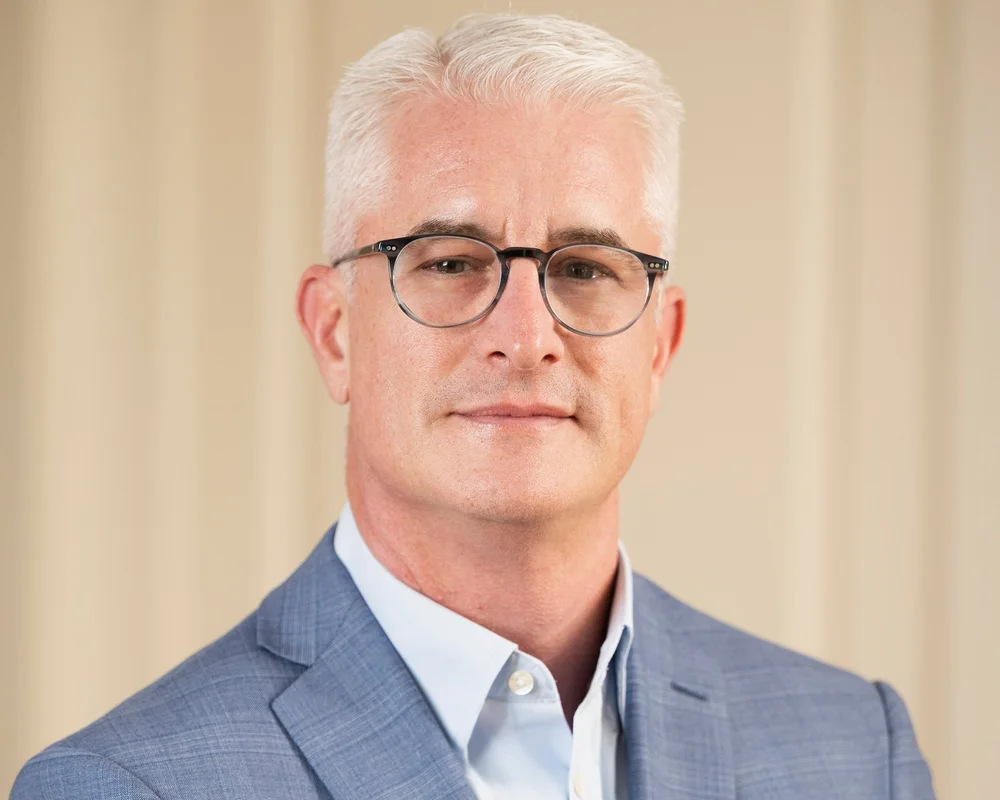




 This Industry Viewpoint was authored by Tony Thakur, Chief Technology Officer (CTO), Great Plains Communications (GPC)
Across the Midwest, in emerging growth corridors and across the nation, we’ve seen a recurring pattern: organizations believe they are protected because they have redundant connectivity until an outage proves otherwise. The issue is rarely bandwidth. It is about overall network resiliency and a strategy to mitigate during an outage.
Enterprises and carriers are no longer simply purchasing circuits. They are relying on fiber infrastructure to support AI workloads, Cloud replication, real-time transactions, wireless backhaul and traffic aggregation. In that environment, redundancy alone does not equal resilience. What organizations actually need is intentional route design built on true physical diversity, geographic awareness and strategic network architecture.
Redundancy is often treated as a checkbox. However, real resilience comes from understanding where fiber physically runs, what corridors it follows, where it aggregates and how those paths behave under stress. Two circuits on paper do not necessarily represent two independent routes.
Redundancy vs. True Diversity
The distinction between redundancy and diversity is not semantic. It is structural. In many markets, secondary connections share the same conduit systems, railroad rights-of-way or bridge crossings. They may appear separate in a network diagram but converge in the field. When a fiber cut, infrastructure failure or severe weather event occurs, logical separation offers little protection if both paths are exposed to the same risk.
True diversity requires deliberate engineering. It means designing routes that enter facilities from different directions, aggregate at separate upstream points and avoid shared chokepoints wherever possible. It often requires additional planning and investment. But that investment is what protects uptime.
It is best practice and a forward-thinking strategy to map routes at the physical layer, not just the service layer. If two paths share a bridge or rail corridor, that represents a single point of failure. Engineering for diversity means identifying those exposures early and designing around them. For enterprises in healthcare, financial services, manufacturing and data services, that distinction directly impacts revenue continuity and customer experience. For carriers aggregating traffic across multiple states, it shapes Service Level Agreement (SLA) performance and long-term network credibility.
Why Route Strategy Matters
Route strategy is not just an engineering exercise; it is a business decision. Backbone design determines how markets can scale, how new services can be layered and how efficiently higher-capacity waves can be deployed over time. A well-planned fiber corridor does more than simply connect two cities. It becomes a platform for expansion, enabling providers to support enterprise customers, wholesale transport, wireless densification and data center growth along the same route. When infrastructure is designed with this level of foresight, a single corridor can serve multiple markets and evolving network demands simultaneously.
Backbone design ultimately determines flexibility five and ten years into the future. Building with geographic diversity and sufficient fiber density not only protects against outages but also enables future services and higher-capacity deployments without requiring a rebuild of the path.
Geography Still Shapes Network Risk
Geography plays a larger role than many organizations realize. Rivers, rail lines, highway corridors and historical construction patterns all influence risk. Splice points and regeneration huts can become concentrated vulnerability zones if not distributed intentionally. Even facility entrances matter. Two diverse long-haul paths provide limited protection if they converge into a single lateral entry point. Understanding those physical realities transforms fiber planning from procurement into strategy.
Interconnection and Ecosystem Resilience
Interconnection is equally critical. Redundant fiber only delivers meaningful value if it ties into resilient ecosystems including carrier-neutral data centers, Cloud on-ramps and diverse upstream providers. Enterprises pushing more workloads into hybrid and multi-Cloud environments need route predictability as much as failover capability. Carriers must evaluate not only where fiber runs, but where traffic aggregates and exchanges.
Designing For Future Growth
Resilience cannot be the only objective. Scalability must be designed into the corridor from the beginning. Conduit capacity, fiber count and regeneration spacing determine whether a network can support exponential traffic growth. The networks being engineered today must anticipate demand patterns that may not fully materialize for years.
Designing only for current bandwidth requirements leads to eventual obsolescence. Strategic route planning must protect both uptime and future growth. The organizations that treat fiber infrastructure as strategic backbone rather than commodity bandwidth position themselves differently. They ask harder questions. They look beyond the service agreement to the physical map, evaluate where routes enter, where they converge and how they scale.
The Bottom Line
Redundancy is a starting point. Diversity is the protection. Route strategy is the advantage. In modern network design, resilience is not accidental. It is engineered with intention.
###
Tony Thakur is the Chief Technology Officer of GPC, where he guides the company’s technology vision and works to enhance its robust fiber network. He also implements new product technologies, identifies national geographic network expansion opportunities and introduces automation efficiencies.
Thakur has held C-level and senior executive positions during his two decades in the telecommunications sector. In this time, he has launched numerous programs and services related to technology infrastructure development, networking and cloud connectivity.
Thakur graduated with a Master of Science in Engineering Management from the Florida Institute of Technology and has a Bachelor of Science in Electrical Engineering from the University of Texas in Arlington.
If you haven't already, please take our Reader Survey! Just 3 questions to help us better understand who is reading Telecom Ramblings so we can serve you better!
Categories: Fiber Networks · Industry Viewpoint · Metro fiber Join Our LinkedIn Group
 Peter Radizeski on T-Mobile, TPG Eyeing Uniti Group?: “With $10B in debt and a market cap of $2.5B, the problem isn’t the price (~$13.5B), it is the mess…” Apr 6, 12:12


Discuss this Post