


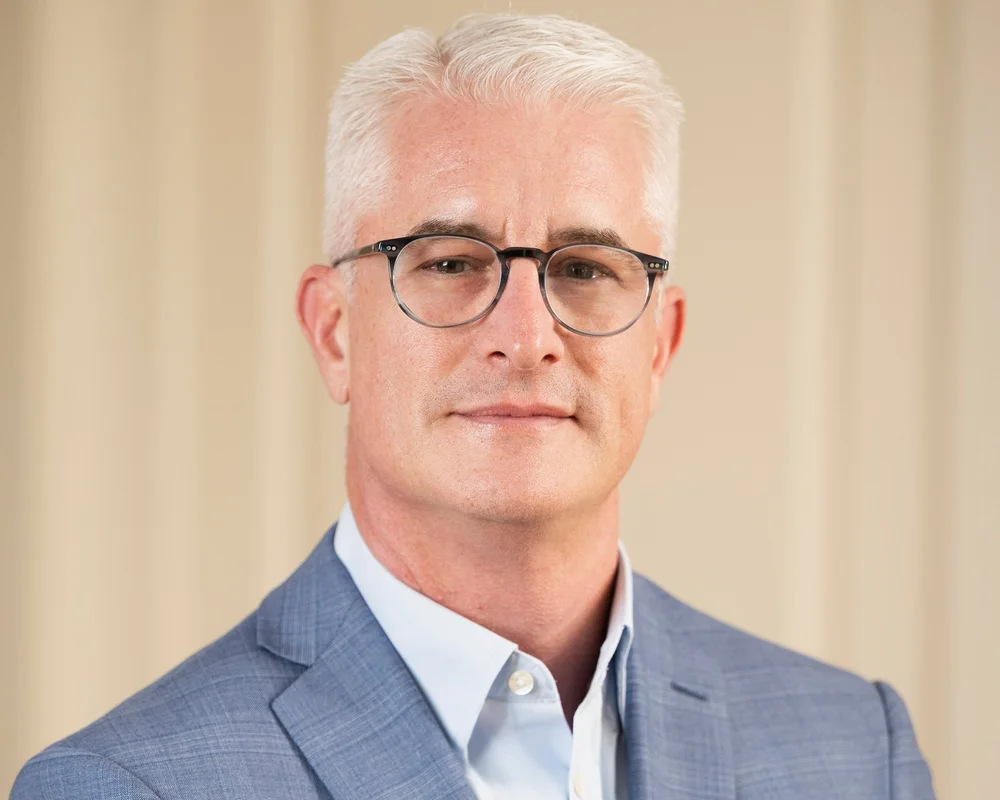


This Industry Viewpoint was authored by Stephen Lafaille, VP Business Development
The data center industry is entering a defining era – one in which power, not land or capital, determines competitive advantage. As AI compute requirements surge and the grid strains under unprecedented demand, operators face a simple but unforgiving equation: every megawatt not available for IT constrains revenue, density, and long-term scalability.
The demand curve for compute-hungry AI workloads is steepening faster than the grid can match.
The result? Power, not floorspace or capital, is now the defining bottleneck to data center profitability and AI-driven growth.
Yet the industry is overlooking one of the biggest sources of trapped capacity inside every facility: traditional, electrically driven cooling. Here’s why that matters.
Where Cooling Constrains the Future of Compute
For decades, data center cooling has been treated as a fixed cost, a tax on electrical capacity. If a facility operates at a peak PUE where cooling consumes 30% or more of available electricity on the hottest days of the year, that power is effectively stranded even if that peak load occurs for only a few hundred hours annually. In practice, this means up to 30% of total available power is allocated away from revenue-generating IT, not because it is continuously required, but because legacy cooling design leaves no alternative.
In an era when every megawatt of compute can generate millions in annual revenue, that paradigm no longer works.
This dynamic is now problematic. Under traditional electric-chiller systems, a facility supporting 1 MW of IT load may consume more than 300 kW of cooling-related electrical load, even though this peak condition occurs only during short seasonal windows. That mismatch between peak provisioning and regular operations constrains operators from deploying additional IT, regardless of whether their IT demand profile warrants it.
In other words, cooling is no longer just a power cost; it has become a capacity bottleneck that limits the ability to deploy GPUs at the scale the market demands.
Unlocking Hidden Megawatts: Cooling as a Profit Engine, Not a Fixed Cost
A notable shift is emerging around the idea that cooling should not be tied exclusively to the electrical side of the ledger. A new class of hybrid-drive, dual-power source chillers, exemplified by technologies recently introduced by companies like Tecogen, shows the industry is beginning to revisit long-held assumptions.
The underlying idea is simple: If a data center can move its cooling load off the electrical grid, it can reclaim a sizable portion of its electrical capacity for IT. In practice, hybrid-drive chillers capable of running on natural gas, electricity, or a blend of both make this possible.
Rather than consuming 300 kW of power per 1 MW of IT capacity, these systems can operate on as little as 10 kW of electrical load when running primarily on natural gas. That shift has profound implications for operators, because it reframes cooling as a variable design input rather than a hard constraint.
For many facilities, particularly the 50–300 MW colocation market, this reallocation is not trivial. Freeing up 30% of electrical capacity changes the economics of both greenfield and brownfield deployments. Colocation operators routinely value each available megawatt of compute capacity at up to $2 million in annual revenue, meaning even modest power reclamation materially impacts financial performance. Under this model, cooling no longer siphons power from compute; instead, it becomes a design choice that directly supports revenue expansion.
Importantly, the argument here is not about choosing natural gas over electricity. It is about using dual-source energy architectures to give operators flexibility, resilience, and power optionality in an ecosystem where grid constraints are increasingly defining the ceiling of what can be built.
Engineered Resilience: A Dual-Fuel Safety Net for Mission-Critical Loads
In an era of grid instability, weather-driven interruptions, and overloaded substation infrastructure, resilience is no longer an afterthought. One of the less-discussed properties of dual-fuel cooling systems is that they can serve as a buffer when the electrical grid falters.
Running chillers on natural gas with minimal electrical demand ensures cooling remains available during outages, voltage swings, or periods of curtailed power delivery without relying entirely on large diesel generators. This reduces stress on backup systems and allows operators to scale gensets for IT load rather than for cooling overhead. For facilities where uptime is measured against strict SLAs, this resilience function becomes part of the broader risk-mitigation strategy.
Hybrid-drive systems are not new in principle; engine-driven chillers have been deployed for decades in hospitals, industrial sites, and temperature-sensitive environments where failures are unacceptable. The difference now is that they are being adapted for high-density data center loads, available in integrated models ranging from ~1 MW to 1.5 MW and in both air- and water-cooled configurations. The industry’s familiarity with engine-driven systems in mission-critical settings provides a reliability baseline that data center operators can build on.
Future-Proofing Data Centers for the Era of AI and Green Power
The long-term implication of hybrid-drive cooling is not just about power savings today; it’s about unbinding data centers from legacy assumptions that all cooling must be electrically driven. As operators prepare for an AI-heavy future, relying exclusively on grid electricity gives way to a more flexible operating model.
Electricity is becoming more constrained, more expensive to deliver, and less available, yet the constraints are often episodic rather than constant. In contrast, natural gas remains a stable and abundant energy source in many U.S. regions, however, it only takes a brief period of using natural gas and decoupling from the grid to alleviate many of the infrastructure bottlenecks. At the same time, dual-power cooling creates a pathway for operators who want to transition toward energy flexible portfolios without re-engineering their cooling architecture or sacrificing compute footprints.
The question now facing the infrastructure community is not whether these systems will be adopted, but how widely and how quickly. Cooling is moving from a background utility to a tactical lever for profit, resilience, and long-term scalability. As data centers continue to grow in size, importance, and economic impact, flexibility will define which facilities scale fastest and which are left constrained by legacy assumptions.
Reframing the Dialogue: From Fixed Cost to Strategic Capacity
The AI era is forcing every segment of the digital infrastructure stack to evolve power distribution, heat rejection, network throughput, and facility design. Cooling stands at a critical crossroads because it touches every one of these systems.
The fastest way to increase compute is not always to procure more electricity, but to reclaim the electricity already on-site. Hybrid-drive cooling models that decouple cooling from electrical dependency offer a rare form of capacity arbitrage, one that could meaningfully reshape how facilities scale during the next decade.
As operators race to support AI workloads that far exceed historical density norms, every reclaimed kilowatt becomes an opportunity. Cooling is no longer a silent consumer of power. It is a strategic asset, one capable of unlocking megawatts, revenue, and resilience when the grid cannot.
 About the Author
Stephen Lafaille started at Tecogen in 2010 as a Product Development Engineer working to help bring Tecogen’s gas heat pump product-Ilios to life. The experience gained in assisting with the development of the Ilios product as well as overseeing its market roll out provided valuable experience. This was applied to Mr. Lafaille’s subsequent role of Product Manager where he acted as an interface between the engineering department and the outside world, increasing his understanding of the sales process and customer need. Leveraging his understanding of the market, business environment, and sales process, Mr. Lafaille moved into a business development role as Director of Business Development, and now Vice President of Business Development. Mr. Lafaille is responsible for developing strategic partnerships, establishing, and growing new markets, and strengthening Tecogen’s position in existing key market verticals.
If you haven't already, please take our Reader Survey! Just 3 questions to help us better understand who is reading Telecom Ramblings so we can serve you better!
Categories: Artificial Intelligence · Datacenter · Energy · Industry Viewpoint Join Our LinkedIn Group
 Juliette Monroe on Contact: “Hi Team, As a fellow exhibitor at OFC Technical Conference 2026, would you benefit from having the full attendee contact…” Mar 20, 11:44


Discuss this Post