

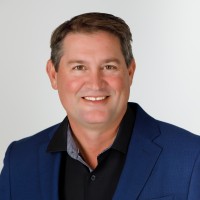
 The rise of AI is changing not just the data center world, but the network infrastructure that connects it. It seems like just yesterday that intercity and last mile fiber were things that didn’t get invested in. That has all flipped, and network operators have been moving rapidly to meet demand. We spoke with Dan Stoll, President of Commercial and Carrier at Fidium, about how the network landscape is evolving.
TR: What is your background and what was your journey to your current role at Fidium?
DS: I’ve spent over 25 years in the telecom and fiber industry, focused on building differentiated, market-leading fiber networks and leading high-performing teams. I spent 17 years at Integra, later Electric Lightwave (ELI), where I held multiple leadership roles before becoming President and leading the fiber division alongside a strong team. Following Zayo’s acquisition of ELI in 2017, I led the fiber business in the West, continuing to scale and differentiate both the network and the organization, strengthening our right to win in the markets we serve.
Six years later, I saw an opportunity at Consolidated Communications, now Fidium, to bring together multiple acquired businesses into one unified, market-focused organization, build a world-class team, and leverage market-leading fiber assets with the capability to build and expand the network. Today, I oversee all aspects of the Commercial and Carrier business, and we’re experiencing great momentum.
TR: What is legacy in the enterprise and carrier market today, and why are enterprises and carriers outgrowing it?
DS: Legacy architectures are costly to maintain and increasingly unable to support growing capacity demands. Examples of these legacy architectures include technologies like TDM, old optical systems, and copper, while enterprises often manage separate voice, data, and security systems that limit scale and increase costs. Addressing these challenges requires a network transformation playbook supported by clearly defined roadmaps to cap, maintain, or migrate legacy architectures and services while accelerating the expansion of fiber infrastructure and fiber service platforms.
TR: What does the network future that we’re transitioning toward look like?
DS: The future is a next-generation, fiber-first network that improves performance, efficiency, and long-term scale. It’s about replacing legacy infrastructure with resilient fiber and enabling modern services like data, voice, cloud, and security. That means expanding fiber networks to support high-capacity connectivity between data centers for hyperscale and enterprise demand, while also scaling fiber distribution through both active and passive architectures to reach new markets and migrate existing enterprise and mid-market segments to fiber.
TR: Artificial Intelligence has been driving decision making throughout the industry. How is that transforming things?
DS: Just when we thought the pace of data center, cloud, and hyperscalers couldn’t grow faster, AI is further tipping the scales with the effect of further accelerating the recent trends. New greenfield data centers and campuses are increasingly locating in new geographies with available power, supportive communities, and potential network access. Power availability and speed to deploy are the primary drivers, with fiber infrastructure following to support demand, often through multiple diverse routes, bulk fiber and conduit builds, low-latency paths, and customized commercial structures, including parallel or privately controlled network paths. Bulk capacity transactions at 100G, 400G, and 800G are now common.
A second trend we have seen is that to enable this scale, hyperscalers and AI technology companies are assembling internal fiber infrastructure “dream teams,” bringing together top industry talent across land and power development, fiber network development, procurement, engineering, and operations.
TR: How are these trends impacting existing Fidium and other fiber network operators?
DS: For us and for other providers, this is a huge opportunity to accelerate growth and fiber expansion. It’s also a very competitive space. Success depends on building the right teams, capabilities, and partnerships to operate at the level AI and hyperscalers expect. These opportunities are large, complex, and move quickly, requiring strong route intelligence and the ability to design and execute at scale. At Fidium, we’re well down this path, with opportunities both in and adjacent to our footprint that give us a real right to win, supported by the fiber assets and reach to go capture this demand.
TR: At what stage do you think we are in terms of the, say, the AI fiber revolution buildouts right now?
DS: What we keep saying is that the next quarter is going to be the biggest we’ve seen, and so far we haven’t been let down. So, my best guess is that we’re still in the early innings and continuing to explore new markets and potentials that otherwise haven’t been on the radar. So, it’s about identifying and learning from our customers where power and both existing and emerging ecosystems exist, and building fiber infrastructure around that. This is driving more regional, geography-based growth, with each cluster requiring multiple diverse routes and significant fiber capacity.
TR: Other than AI, what are the biggest shifts going on in the wholesale and carrier markets right now?
DS: I’d start by saying network intelligence is table stakes. Buyers want clear visibility into routes, buildings, current fiber reach and plans for future builds. Strong planning tools and serviceability platforms are key to enable day-to-day transactions and support large custom fiber builds such as hyperscale and Data Center expansions.
The wholesale base is radically expanding, and likewise the go-to-market coverage is evolving to meet it. It now extends beyond traditional wireless and wireline to include hyperscalers, data centers, integrators, aggregators, and MSPs/ISPs, requiring broader and more specialized go-to-market coverage.
Lastly, deal models and deal structures are becoming more flexible. Customers increasingly expect scalable pricing, flexible deal structures, and partnership-style support that align with their long-term network growth. At Fidium, our fiber assets, planning transparency, and flexible approach position us well to support both traditional carriers and emerging markets.
TR: With that in mind, what architectural and investment decisions should be made today to address a rapidly evolving market?
DS: Invest in systems that scale. It’s not about solving for today, but building a framework that allows you to grow and scale, moving from 100G to 400G, 800G, and ultimately multi-terabit capacity. Every build should maximize fiber and conduit capacity, with high fiber counts and planned conduit routes that enable future growth. Strive to differentiate your routes and offerings; durable networks come from unique, resilient routes which deliver long-term performance and competitive advantages. That’s what creates both customer value and your right to win.
TR: What challenges lie ahead for the network infrastructure business?
DS: I’d say the challenges are largely the same, but everything is moving faster and at a bigger scale. It comes down to balancing competing priorities, driving fiber expansion while staying disciplined on capital, growing the business while protecting the customer experience, and managing legacy while investing in the future. Culture plays a big role in that. You need teams that are aligned, accountable, and focused on execution. You have to stay clear on where you have a right to win and make sure everyone is moving in that direction. At the same time, you have to stay agile and adjust to changes in supply, competition, and the market. And at the end of the day, this is why we’re in this industry, because we enjoy the challenge of building, scaling, and competing at this level. Let’s go crush it!
TR: Thank you for talking to Telecom Ramblings!
If you haven't already, please take our Reader Survey! Just 3 questions to help us better understand who is reading Telecom Ramblings so we can serve you better!
Categories: Artificial Intelligence · Fiber Networks · Industry Spotlight Join Our LinkedIn Group
 Rodger Rudolph on Globalinx Poised to Construct a Subsea Cable Landing Station in Ocean City – Worcester County Maryland: “The site location map is not legible. Can you provide me with a legible map to show exactly where along…” Mar 20, 20:51


Discuss this Post