
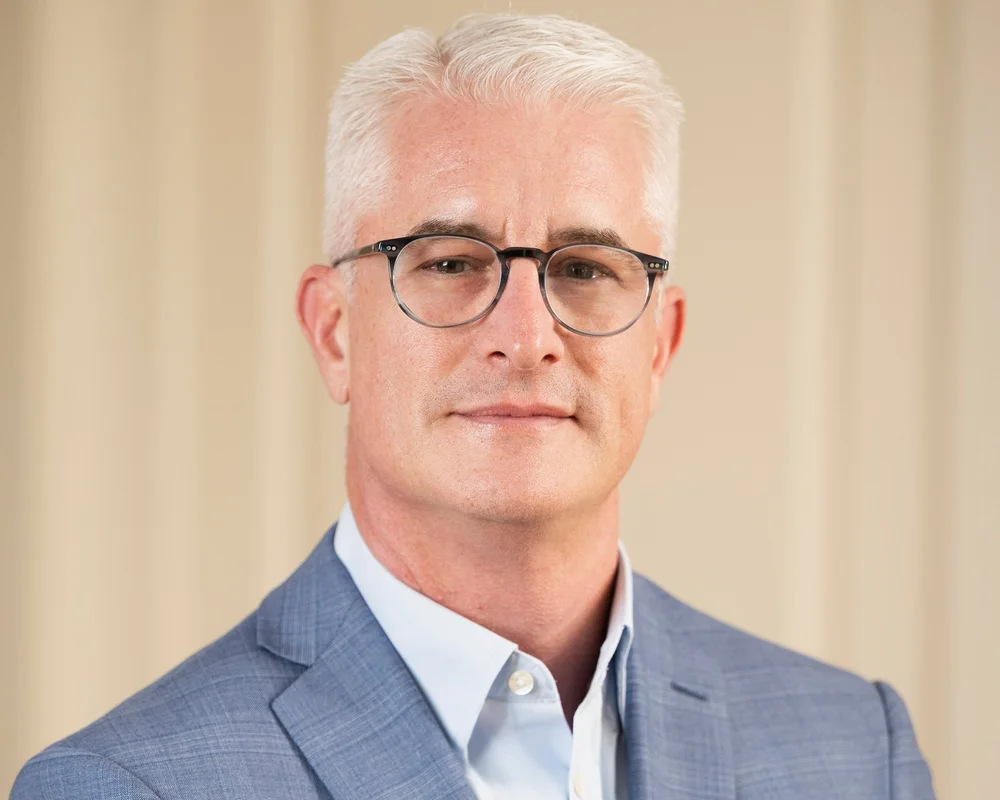





 This Industry Viewpoint was authored by Abhilash Kunnatoor Margabandu, VP of Infrastructure Engineering, EdgeCore Digital Infrastructure
As artificial intelligence accelerates demand for compute, the definition of what makes a data center “future-proof” is changing rapidly. Three years ago, racks ran at roughly 15-50 kW, yet today, deployments regularly reach 130 kW – with some projections suggesting densities may exceed 600 kW per rack by 2028. Given today’s speed of innovation, AI is compressing a decade of infrastructure evolution into just a few years, and to mend the gap between legacy facility designs and modern compute workloads, data centers must fundamentally change from a design and operational standpoint.
To stay successful in 2026 and beyond, developers must adopt industrial-scale designs that safely and efficiently manage extreme power and cooling densities while allowing for operational flexibility, modular expansion, and integration of new cooling and power systems. Planning for densification rather than reactive retrofits is becoming a core requirement for AI-ready facilities. Here’s the roadmap to keeping pace with today’s rate of change:
Near-Term: Direct-to-Chip Liquid Cooling
As AI workloads push rack densities higher, traditional cooling systems are increasingly inadequate. Given this, forward-thinking developers are prioritizing AI-optimized, high-density designs that incorporate direct-to-chip (D2C) liquid cooling, which is rapidly becoming the standard for next-generation facilities. By delivering coolant directly to processors and memory modules, D2C systems manage heat far more efficiently than conventional solutions, enabling higher-density racks and consistent performance for compute-intensive AI applications.
Implementing this type of infrastructure requires not only technical innovation but also substantial capital investment. Analysts project that meeting AI-driven demand could require as much as $720 billion in global grid investment by 2030. This financial scale has drawn heightened investor interest, with participants entering the market via joint ventures, utility spin-offs, and Independent Power Producers (IPPs) to help scale critical AI infrastructure.
By adopting D2C liquid cooling proactively, developers position their facilities for densification rather than reactive retrofits, ensuring that the infrastructure can support future waves of AI workloads efficiently. Early adoption also allows operational teams to optimize power usage, cooling efficiency, and reliability, which are critical for high-performance computing environments.
The Next Frontier: High-Scale Power Delivery & Efficiency
Heat management is only part of the challenge. Delivering unprecedented volumes of electricity safely and efficiently is the next frontier for AI-ready data centers. Traditional facilities were designed for generalized computing workloads, often around 10–15 kW per rack, and cannot support the extreme power, networking, and thermal demands of AI infrastructure.
Power capacity is no longer just about adding more megawatts; it’s about delivering that power into dense racks reliably, flexibly, and with minimal losses. Advanced busway architectures, high-capacity breakers, and modular distribution systems are critical to improving Power Usage Effectiveness (PUE) and maintaining operational efficiency. Analysts note that facilities unable to scale power delivery efficiently risk performance bottlenecks, increased downtime, and higher operational costs.
Long-Term Strategies
Site-selection strategies must now account not only for immediate land and power availability, but also for long-term expansion flexibility, infrastructure upgrades, and sustainability requirements. Developers who plan for modular growth, alternative cooling, and energy-efficient designs can better manage operational costs, environmental impact, and regulatory compliance while ensuring that AI workloads can scale effectively over the life of the facility.
The Road Ahead for Future-Proof Data Centers
The age of AI is redefining what “future-proof” means for data centers. It is no longer just about adding square footage or megawatts; it is about designing for higher densities, integrating cooling and power innovations, and planning for long-term resource constraints.
The overall imperative is clear: secure land and power with strategic foresight, then design with flexibility to meet escalating density requirements. Developers who plan proactively will deliver infrastructure capable of supporting the next wave of AI computing — scalable, resilient, and efficient.
If you haven't already, please take our Reader Survey! Just 3 questions to help us better understand who is reading Telecom Ramblings so we can serve you better!
Categories: Artificial Intelligence · Datacenter · Industry Viewpoint Join Our LinkedIn Group
 Peter Radizeski on T-Mobile, TPG Eyeing Uniti Group?: “With $10B in debt and a market cap of $2.5B, the problem isn’t the price (~$13.5B), it is the mess…” Apr 6, 12:12


Discuss this Post