



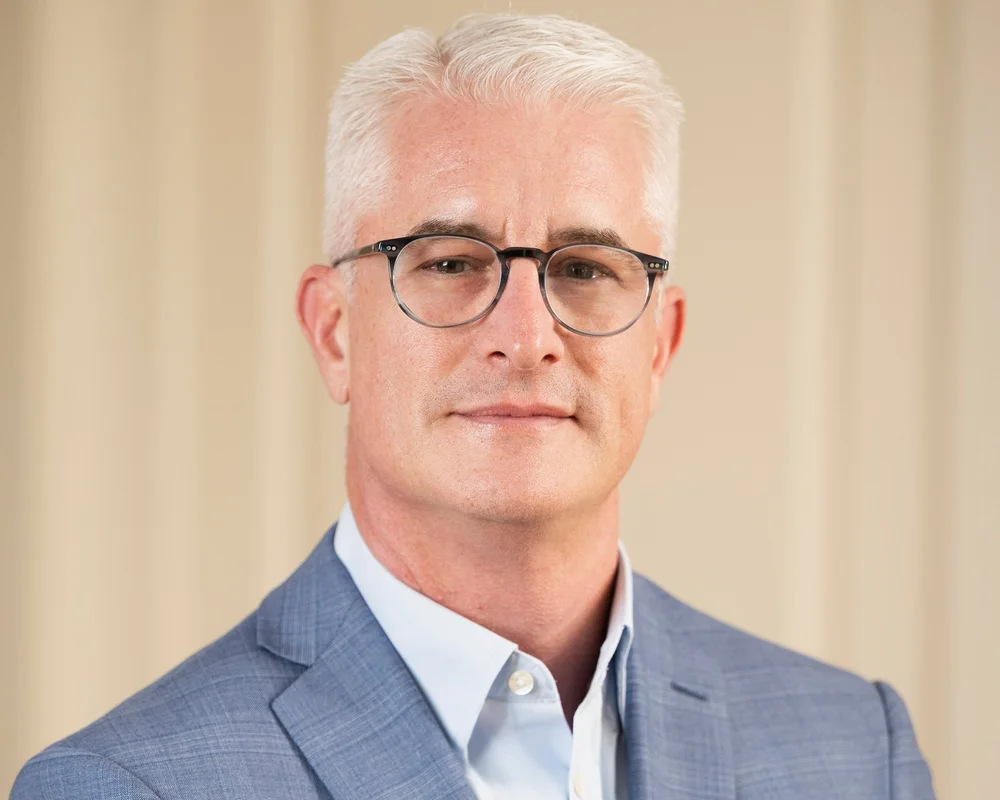


 This Industry Viewpoint was authored by Steve Douglas, Head of Market Strategy at Spirent, now part of Keysight
We spend a lot of time in this industry hypothesizing what the world will look like in 10 years. But when technology moves this fast, looking that far out is just prediction. Looking two or three years out? That is engineering.
We see the technology in the lab long before it hits the mainstream. We test the gear that operators will deploy the year after next. Based on the data we are seeing right now, 2026 looks like the year the industry moves past the marketing slides and starts doing the heavy lifting. We are seeing a shift toward practical, high-value implementations in 5G, AI infrastructure, and the early definition of 6G.
Here is what the data tells us to expect.
The Real 5G Finally Shows Up
We have been talking about 5G Standalone (SA) for a long time. Through 2026, most Tier 1 operators will finally make SA the default. This matters because the non-standalone networks we have used for years were essentially faster 4G. They relied on the old core.
The move to SA changes the architecture. It brings a cloud-native core that lets operators deliver on the promises they made years ago. We are seeing operators preparing to switch on 5G-Advanced capabilities now that 3GPP Release 18 is frozen and Release 19 is approaching quickly.
This is not just about speed. It is about control. Operators need these updates to run industrial automation and extended reality (XR) use cases effectively. The SA architecture is the foundation for making money from the network rather than just selling buckets of data and speed.
This is where network slicing finally makes sense. With a programmable SA core, operators can dynamically create virtual networks. Think about a port authority that needs guaranteed performance for logistical apps. or a utility company that needs dedicated connectivity for critical infrastructure. The SA core allows them to get exactly what they need without impacting the rest of the network.
Telcos Will Not Just Be the Pipe for AI
For the last decade, telecom operators watched hyperscalers build massive value on top of their networks. With AI, they are not making the same mistake. They do not want to be just a pipeline to a data center in Ashburn or Dublin.
Operators are realizing they own the most valuable real estate. The edge. In 2026, we will see operators hosting AI infrastructure directly within their networks. This creates a new business model we call AI-as-a-Service.
The use cases here are specific. It is not about building another generic chatbot. It is about “Sovereign AI.” This means keeping data within a country’s borders for legal or privacy reasons. It is about serving industries where latency and privacy are non-negotiable, such as healthcare and finance. We are already seeing customers explore how to optimize their networking for AI traffic and host this infrastructure to offer GPU-as-a-Service capabilities. They are finding ways to participate in the value chain rather than just support it.
The Device Becomes the Data Center
While operators build out the edge, the devices in our pockets are getting smarter. Today, most AI processing happens in the cloud. That is expensive and creates privacy risks.
By 2026, we expect advanced smartphones to run persistent AI models right on the device. Your phone knows more about you than any server ever could. It knows your location, your schedule, and your communication style.
Processing this data locally reduces reliance on the cloud. It also solves a bandwidth problem. If every AI request has to travel across the network, the gridlock will be unmanageable. Moving a percentage of inference to the device is efficient. We work with smartphone manufacturers developing devices that serve as independent AI processing units. This shift means the user gets a faster response while the network gets some breathing room.
The Race for 6G is Already On
5G is still maturing, but the fight for 6G leadership has already started. Right now, China and advanced Asian markets are running ahead with trials they hope will shape the standards.
They are exploring the “Golden Bands” in the 7-8GHz range and testing sub-THz bands for extreme data rates. This early work establishes technical direction and leadership.
The focus in these trials is on multi-band integration. It is also about new ways to transmit data, like Integrated Sensing and Communications (ISAC). The rest of the world needs to pay attention. If we are not pro-active in these early stages, we end up following standards set by others.
Ethernet Wins the AI Data Center
The explosion of AI forced data centers to evolve fast. They often used closed, vendor-specific technologies to connect their massive clusters. But closed systems are expensive and hard to expand.
The market is re-architecting itself. We are seeing a strategic pivot toward Ethernet for AI data center back-end training fabrics. Standards like RDMA over Converged Ethernet (RoCE) v2 are proving they can handle the load and provide deterministic, low‑loss, low‑latency connectivity for large GPU clusters.
This is about economics. To train trillion-parameter models, you need massive clusters. Using standardized Ethernet optimized for AI traffic patterns and behaviors allows these facilities to grow cost-effectively. Even the biggest GPU vendors are introducing Ethernet variants of their tech. The Ultra Ethernet Consortium is driving this, and major providers are moving in this direction to avoid vendor lock-in.
The Road Ahead
The common thread for 2026 is practicality. The industry is moving past the initial excitement of “what if” and settling into the engineering reality of “how to.” Whether it is switching on the 5G standalone cores, moving AI processing to the edge, or standardizing data center networking fabric, the goal is the same. We are building infrastructure that works for the long haul.
If you haven't already, please take our Reader Survey! Just 3 questions to help us better understand who is reading Telecom Ramblings so we can serve you better!
Categories: Industry Viewpoint · Wireless Join Our LinkedIn Group
 Rodger Rudolph on Globalinx Poised to Construct a Subsea Cable Landing Station in Ocean City – Worcester County Maryland: “The site location map is not legible. Can you provide me with a legible map to show exactly where along…” Mar 20, 20:51


Discuss this Post