
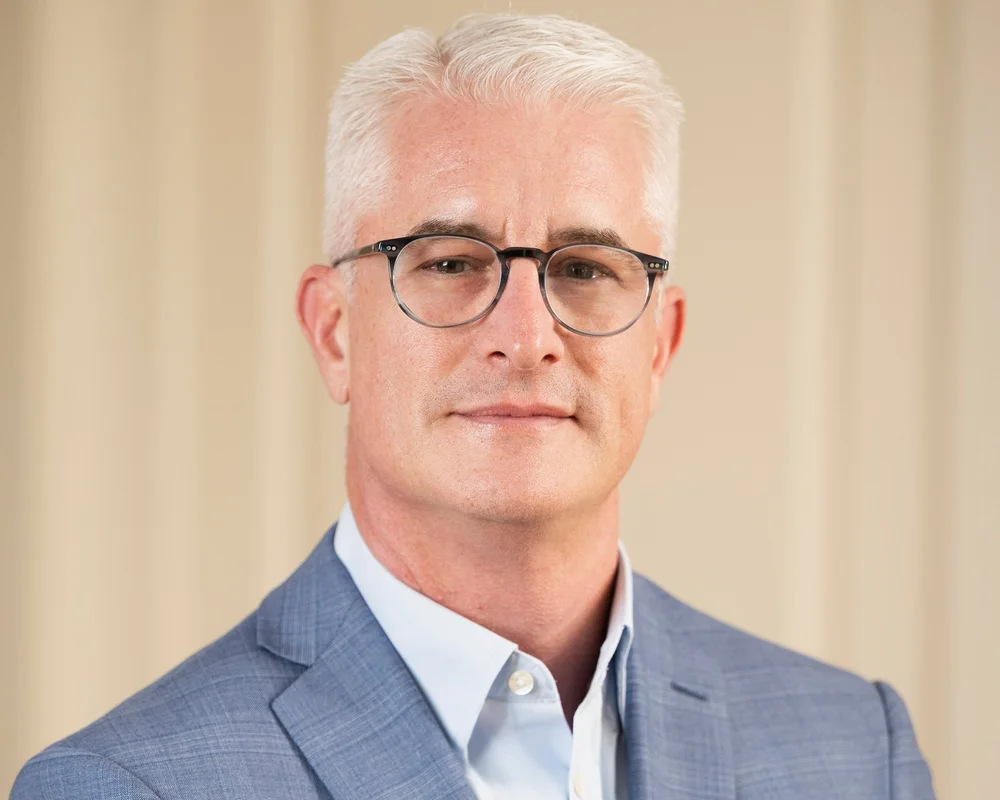
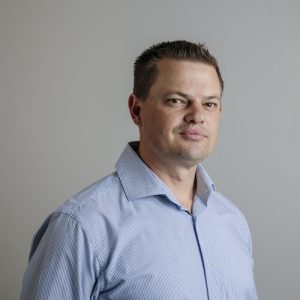

Today we have a visit from another participant in the national FTTH buildout party we have all been watching the last few years. Ezee Fiber got started on a metro footprint in Houston, but has quickly moved into New Mexico, Washington, and Illinois, with perhaps more to come. With us today to talk about the company’s approach and plans for the future is CEO Matthew Marino.
TR: Well, tell me a bit about yourself and your background. How did you get to where you are, and what drew you to Ezee Fiber?
MM: My background in this industry is big cable. I started my career working for Insight Communications. I first joined, believe it or not, on the programming side, and what I thought would be a quick stop in my early 20s in a fascinating industry became my career. The team there is now largely the same team running Google Fiber. Insight was sold to Time Warner Cable, which was later sold to Charter where I worked for a number of years before moving over to Altice USA just after Altice bought Cablevision. Along the way I worked in a succession of sales, marketing, and operations job, culminating at Altice USA where I ran the consumer business. I saw very clearly that fiber was the future, and I saw an opportunity to really build something in partnership with I-Squared, who is now our sponsor. I wanted to build it the right way — the best products, the best service, the best experience for customers — and skip a lot of the pain points that are so consistent in this industry, some inflicted intentionally, some unintentionally. And we’ve been on a rocket fuel path.
TR: What does your infrastructure look like today?
MM: The genesis of the company was a metro fiber asset that was purchased, ICTX WaveMedia. That acquisition was a launching point for Fiber-to-the-Home. We build out and make basically network expansion decisions based on the FTTH business. But we actually build our network to take advantage of the business market, not only the SMBs that are often adjacent to FTTH, but true enterprise fiber for medium-large businesses, municipalities, and education. We also target community solutions: the MDU business and master-plan community bulk business. So we like to participate in fully monetizing our network across all verticals.
TR: The original asset was just in Houston, where have you expanded since?
MM: Our largest footprint is where we started out building in Houston. Next we expanded to New Mexico: the Albuquerque, Rio Rancho, and Santa Fe metro areas. We subsequently expanded to the Puget Sound region of Washington. Our first market is Kent, but we’re going to be all throughout the greater Puget Sound region all the way down to Vancouver WA, which is right north of Portland. And the fourth state we have announced is Illinois, specifically the Chicago metro area. We have full builds happening across all of them. By the end of this year and into 2026, we will be across 80 different municipalities across the four states.
TR: What types of markets do you prefer to target? Any particular geographies?
MM: We think we can justify our build if we can find a pocket of customers – a minimum of tens of thousands of FTTH customers. And we don’t just drop ship folks in, build, and then ship them out. We establish local headquarters, build a local team, and do the whole thing. We’ve been very fortunate that we found great opportunities in the suburban areas outside of what I would call major NFL cities, although Albuquerque is not an NFL city. We haven’t announced all the areas we’ve been looking at, but we don’t have any bias other than making sure that we have a dense enough footprint to support our build.
We look for markets where there’s a strong demand for fiber internet. That could mean that they’re underserved by the current provider. Or it could mean that there’s a really interesting opportunity to work with the local municipality, to partner with them to build out our network in close collaboration. But at the end of the day, it comes down to finding local communities that are aching for another provider to come in.
TR: How do you approach the consumer opportunity in those markets?
MM: I think we have the best product: 1G, 2G, 5G and 8G symmetrical fiber internet. According to Speedtest by OOKLA and reported by PC Mag in the markets where we compete, we have the fastest speeds, and the lowest latency. In addition, we have the best WiFi (rated by PC Mag and eero also received Wi-Fi Now Award).
We partner with eero for WiFi 7, which is an incredible service and a real differentiator. And we do it at a fantastic price, so the value proposition for consumers is unique and outstanding. We have a customer-first mentality, and people are starved for that. They’re used to, quite frankly, being treated poorly.
TR: What type of competition do you run into?
MM: It’s mostly cable. Cable has a history of poor service, unreliable internet, and price increases. A lot of cable companies love to tell you how wonderful they are, but at end of the day, they are doing the same old promotional pricing for what I consider subpar product. They try to get you in, and put you into a confusing bundle. You need a PhD to figure some of this stuff out sometimes, and I’ve been doing this my whole career. With Ezee Fiber, there’s no gimmicks and no ploys. What you see is what you get. We like customers to be happy. And we’re fortunate in that we’re creating something where our product is cutting edge, and we can offer it at a price point that you can’t beat.
TR: At what point do you think the industry’s FTTH buildouts will have reached all the better markets? How much runway is left?
MM: I think at the end of the day, you’re going to have a number of regional and national players out there who are all looking to consolidate markets that have similar characteristics.
Over time, I think that the overbuild will taper off, but I don’t see that in the next couple of years. I don’t think it’s rational for fiber builder players to start having several + 1G plus providers in a market, so I would like to think that there’s a finite timeline for this overbuild. The real key and where Ezee Fiber differentiates itself is in being able to move and operate at scale and able to take advantage of working with the communities we serve to get our network deployed in an efficient manner.
TR: You announced the acquisition of Tachus relatively recently. What drew you to make that move?
MM: Tachus Fiber Internet is a fantastic company in northern Houston based out of The Woodlands. It shares the same DNA as Ezee Fiber: a tremendous network and tremendous focus on the customer and a wonderful team. And our companies are essentially made to be combined, and it makes tremendous industrial logic to bring them together. And we’re in the midst of making an incredible story for Tachus footprint customers. We’re going to be offering higher and higher speeds — more product for the same price or less. It is a really great deal, and we will look for additional opportunities as they present themselves.
TR: How do you view the opportunity to expand inorganically in general?
MM: Our focus, our mission is organic expansion. We are an execution machine on our organic growth plans, both on the build side as well as the customer growth side. But I do think that there’s going to be a round of regional consolidation, in fact I think we’re in the middle of it right now and it will probably play out over the next couple of years. We are very well poised to take advantage of that under the right circumstances.
What makes a positive acquisition is the ability to bring two companies together where one plus one equals three or four. Doing an intelligent acquisition means making sure that the company you’re buying has the same DNA, the same reputation, the same focus on customer-first service, and the ability to provide the same products or have a path to do so. The actual execution of the integration of the company is always a consideration as well. There are a lot of great companies that are coming toward the end of their build plans and will need to either continue to operate independently or look for a partner.
Obviously, we’re very value-conscious and want to make sure that we continue to be value-conscious. We think that we can build at a return that is very attractive, and we want to make sure, that anytime we would buy something, it would also be accretive to that overall investment. But that being said, we have a demonstrated track record of being able to integrate businesses successfully and quickly. That is something that we have in our DNA.
TR: Thank you for talking with Telecom Ramblings!
If you haven't already, please take our Reader Survey! Just 3 questions to help us better understand who is reading Telecom Ramblings so we can serve you better!
Categories: FTTH · Industry Spotlight · Metro fiber Join Our LinkedIn Group
 Jim Schwartz on Metro Bytes: LSC, FiberLight, RightFiber, Ezee Fiber, LOGIX: “Hey Rob, thanks for the mention about our expansion into Michigan. We appreciate it.” Feb 25, 08:52


Discuss this Post